The Middle Corridor: What the Trans-Caspian Route Means for Logistics Through Azerbaijan
The Trans-Caspian International Transport Route links China and Central Asia with Europe via the Caspian Sea and Azerbaijan. Here is why it matters for your supply chain.
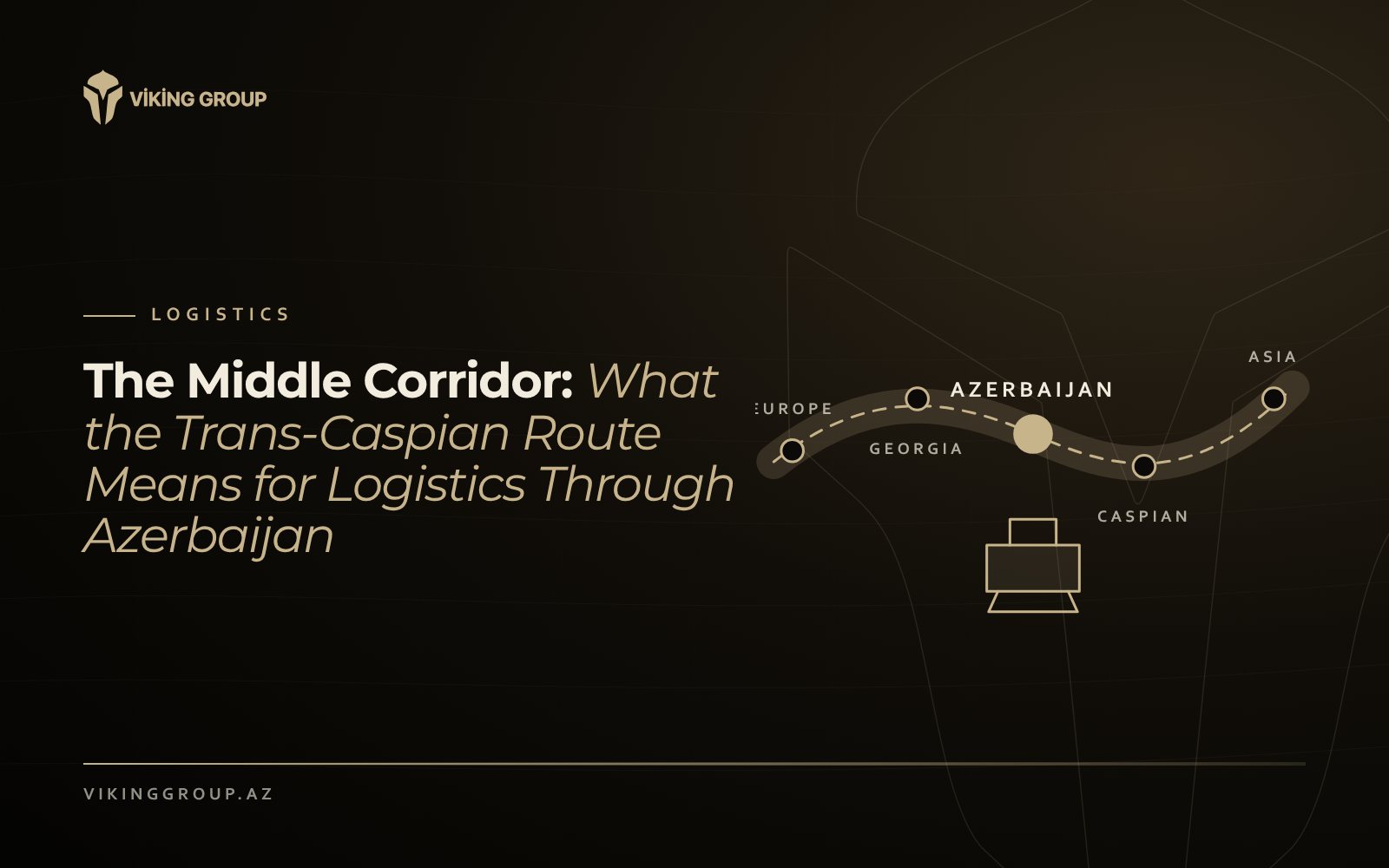
The Middle Corridor — officially the Trans-Caspian International Transport Route — connects China and Central Asia with Europe without passing through the northern routes. Cargo crosses Kazakhstan or Turkmenistan, sails across the Caspian Sea to Azerbaijan, and continues by rail or road through Georgia and Türkiye to European markets.
Why the route has grown in importance
Shippers have been looking for diversified routes between Asia and Europe. The Middle Corridor offers an alternative with growing rail, port and ferry capacity, and Azerbaijan sits at its centre as the Caspian gateway to the Caucasus.
How cargo moves along the corridor
- Rail or road from China and Central Asia to Caspian ports such as Aktau, Kuryk or Turkmenbashi.
- Ferry, Ro-Ro or container vessel across the Caspian Sea to the Port of Baku at Alat.
- Rail or truck onward through Georgia — including the Baku–Tbilisi–Kars railway — towards Türkiye and Europe, or to Black Sea ports.
What shippers should plan for
- Multimodal coordination — several handovers between rail, sea and road.
- Customs and transit documents at each border.
- Seasonal weather on the Caspian that can affect ferry schedules.
- A reliable local partner at the Azerbaijani gateway.
Viking Group on the corridor
We provide international freight forwarding by sea, road and air, customs brokerage and transit documentation, supporting cargo moving through Azerbaijan in both directions. Read more on our Logistics page.